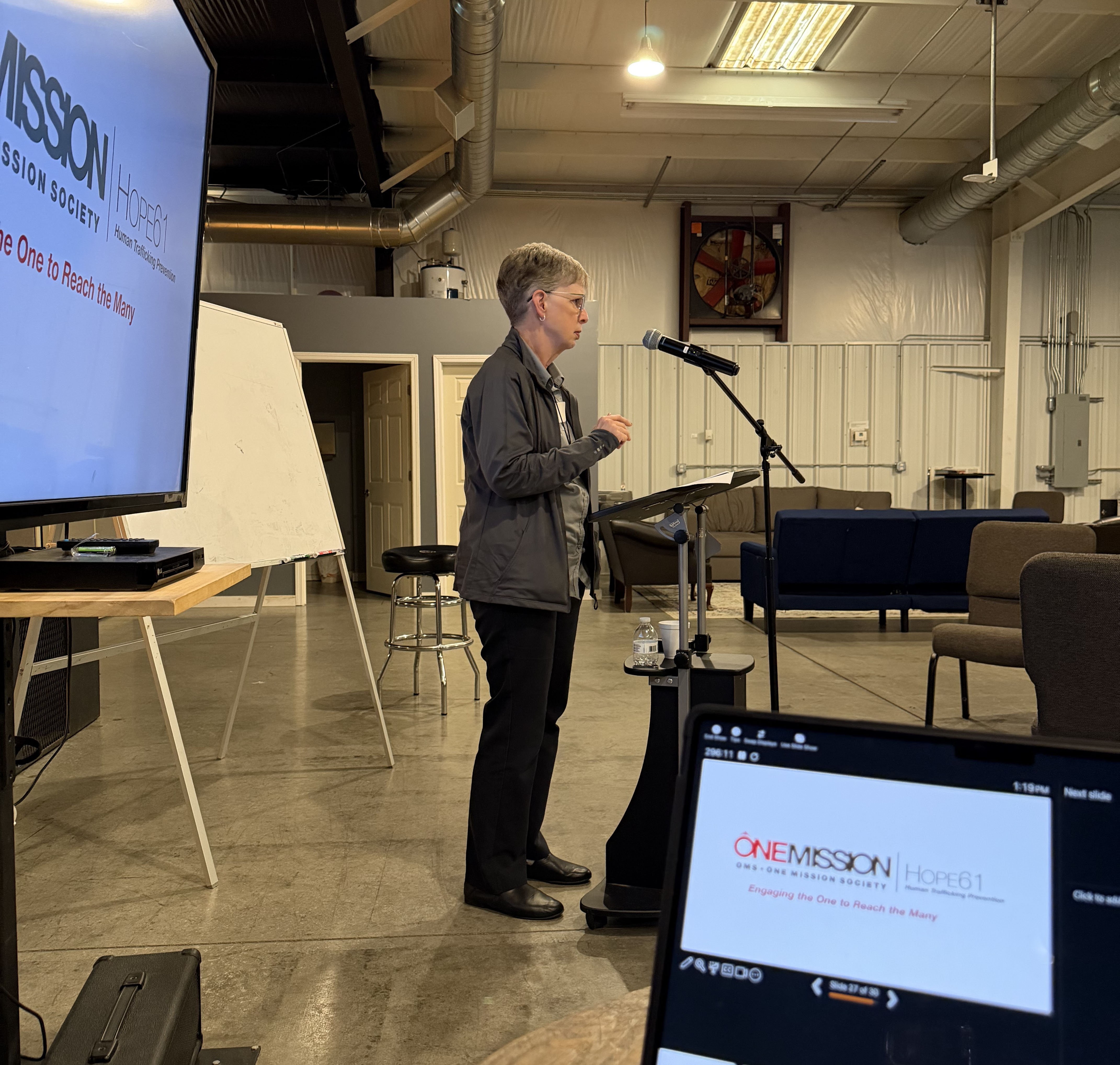
In every HOPE61 training, there’s a moment that changes everything.
It usually happens right after we’ve spent time talking about what human trafficking really is. This part of the training is hard. The stories are heavy, the realities are dark, and the statistics are heartbreaking.
During one recent training in North Carolina, a tenderhearted woman had to step out several times, overwhelmed by what she was hearing. Yet, she kept coming back. When asked why, she said, “Because I need to know. I can’t help if I don’t understand what’s happening in my community.”
That moment captures what so many people feel when they first confront the evil of human trafficking: heartbreak, anger, and the deep desire to do something.
And that’s where hope begins.
The Shift: From Desperation to Action
By the end of the first section of our training, most participants ask, “Okay … what can we do?”
When we move into the “how” portion—when we talk about prevention—something incredible happens. People begin to realize that they already have what God can use to make a difference.
The “aha” moment comes when they understand that their skills, relationships, and everyday faithfulness can protect people from ever being trafficked in the first place.
Not everyone can be part of a rescue operation or work in aftercare. But everyone can play a role in prevention.
The Reality: A Crisis Hidden in Plain Sight
Human trafficking remains one of the fastest-growing and most profitable crimes in the world. According to the latest UN estimates, around 50 million people are living in modern-day slavery on any given day—including more than 27 million in forced labor and 22 million in forced marriages.
Women and girls make up over half of all detected victims, and child trafficking is rising sharply. Many are exploited for labor or domestic servitude, but sexual exploitation remains the most common form of trafficking—accounting for roughly two-thirds of all cases. Traffickers are increasingly using digital platforms and social media to recruit, groom, and exploit victims, sometimes without ever meeting them in person.
Despite growing awareness, the reality is staggering: Only about 1% of all trafficking victims are ever rescued (UNODC Global Report, 2024).
Why Prevention Is So Vital
That single statistic—the 1%—is why prevention is not optional; it’s essential.
If only 1 out of every 100 people trapped in trafficking will ever be rescued, then waiting until after exploitation has occurred means we will never catch up. Rescue and aftercare are holy, necessary work, but prevention changes the story before it begins.
Prevention addresses the roots—poverty, isolation, lack of opportunity, and broken relationships—that make people vulnerable in the first place. It empowers ordinary people to do extraordinary good: teachers, pastors, parents, and neighbors all playing a role in creating safe, watchful, and connected communities.
And here’s the powerful truth: every person prevented from being trafficked is a life that will never need to be rescued.
Come back next week for part 2 of Prevention: The Power to Stop Trafficking Before It Starts.